Across the Stone Hills, the dead were treated with obvious care — but Sayburç makes something plain that is easy to forget: at this village, people were laid to rest inside the houses where the living slept and ate. Asked whether the burials were in ritual areas or the homes, the excavation director was direct: they are in the dwellings.
A person, not just a burial
One recent find is a primary burial — an individual laid out in place, the skeleton still articulated, rather than a jumble of re-gathered bones. Above and around it were clusters of secondary remains, but at the bottom lay a single person, arranged with care.
There was a hole in the skull. The anthropologist thinks it was a blow — and one of the long bones was broken while she was still alive.
— preliminary field observations at Sayburç. Further analysis is ongoing.
An injury to the head and a bone broken in life: for a moment, the archaeology stops being about architecture and becomes about a human being — someone who was hurt, who lived, and whom this community chose to keep close after death. What the injuries mean — accident, violence, or something else — is exactly the kind of question that careful study, not speculation, will answer.
A skull set apart
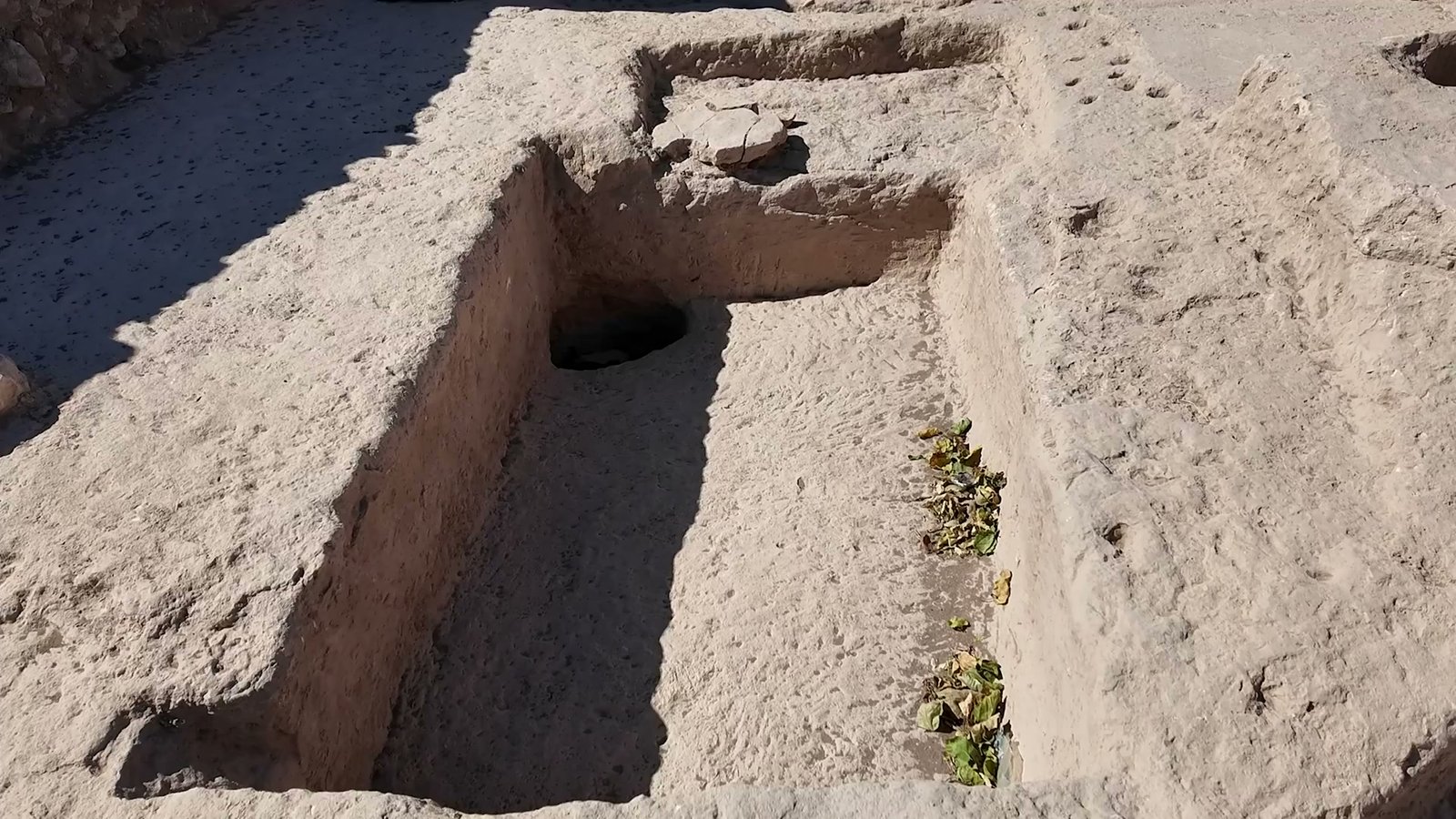
Not every one of the dead was treated the same. In one communal building, a single skull was placed into a niche cut in the wall, held apart from the other remains. Whether it belonged to a remembered individual, or marked the room in some way, is unknown — but the choice was deliberate. It connects Sayburç to the wider regional concern with the human head, seen from Göbekli Tepe to the skull room at Sefertepe.
Why keep the dead at home?
Burial within the house is known elsewhere in the Neolithic — famously at Çatalhöyük, where people were interred beneath the floors. At Sayburç it suggests the dead remained part of the household: present, remembered, underfoot. It is one more way this village refuses the neat split between the sacred and the everyday.
Sources
- Field observations and interview with the Sayburç excavation director and site anthropologist (2025–26 season).
- Özdoğan, E. 2022/2024 — Sayburç settlement & burial contexts. Antiquity
- Comparative context: intramural burial at Çatalhöyük and skull treatment across Taş Tepeler.