- What
- Five-figure bench relief
- Where
- Sayburç, Şanlıurfa, Türkiye
- Age
- ~11,000 years (9th mill. BCE)
- Panel size
- ~0.7–0.9 m high, 3.7 m long
- Excavated by
- Eylem Özdoğan, from 2021
- Published
- Antiquity, December 2022
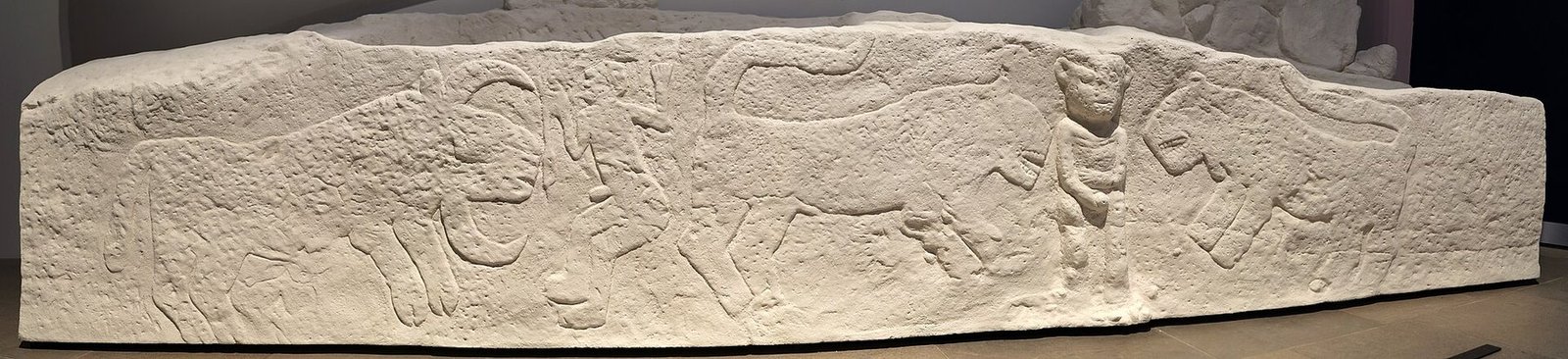
In a round building carved into the bedrock at Sayburç, archaeologists found a row of figures cut along the front of an interior bench. Five of them belong together in a single composition: a human between two leopards, and a second human beside a bull. It is small — the carved band stands less than a metre high — but its importance is enormous. Most scholars regard it as the earliest known narrative scene in human history: not a lone animal or symbol, but figures placed in relation to one another, telling something.
The relief was published by Assoc. Prof. Dr. Eylem Özdoğan of Istanbul University in the journal Antiquity in December 2022, and it belongs to the wider Taş Tepeler world that includes Göbekli Tepe and Karahan Tepe.
What the relief shows
Reading the carved bench, five figures stand out:
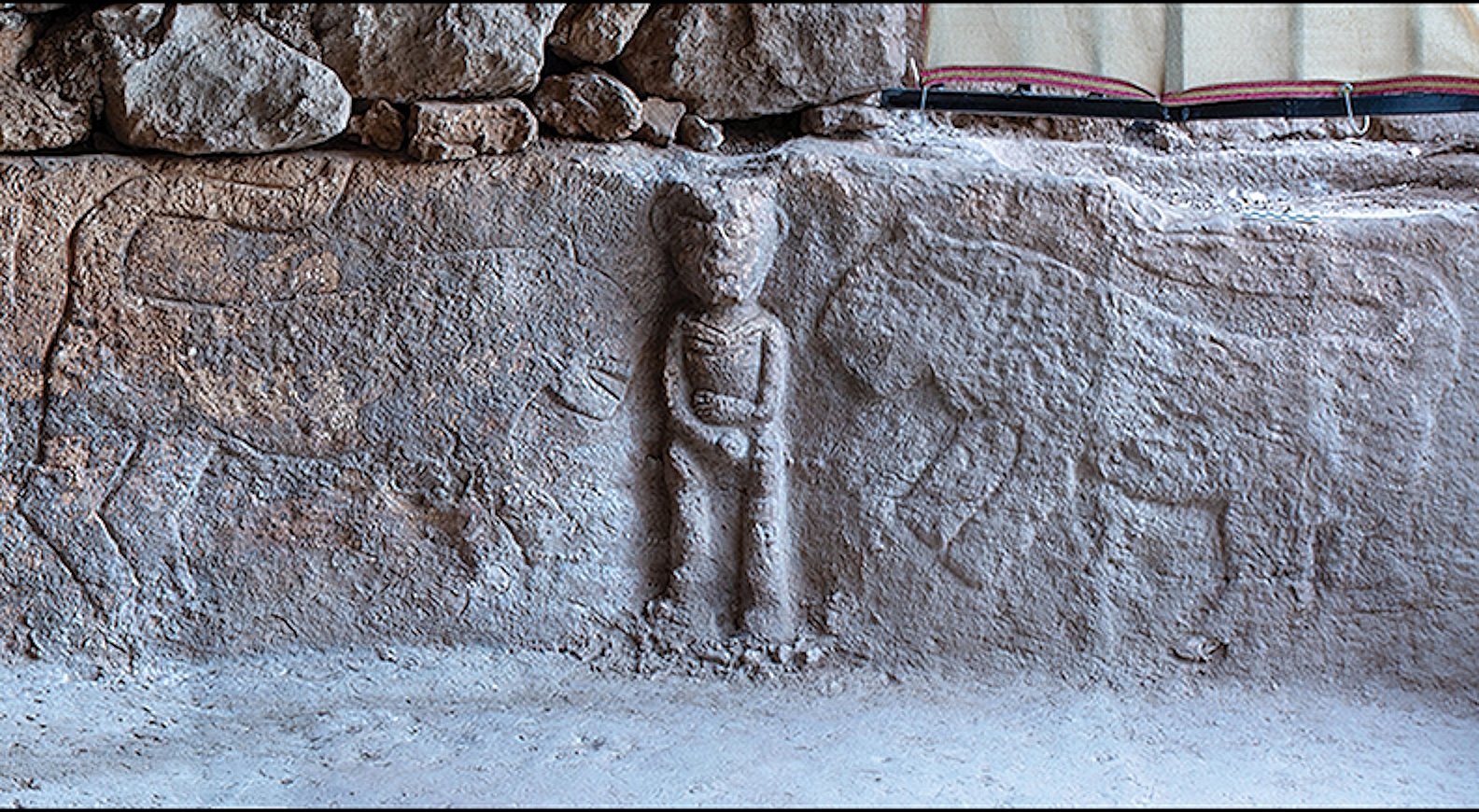
- A central male figure, shown in high relief, facing out into the room. Özdoğan describes him as holding his phallus in his right hand.
- Two leopards, one on each side of that figure, shown in profile with open mouths and curled tails — their teeth deliberately marked.
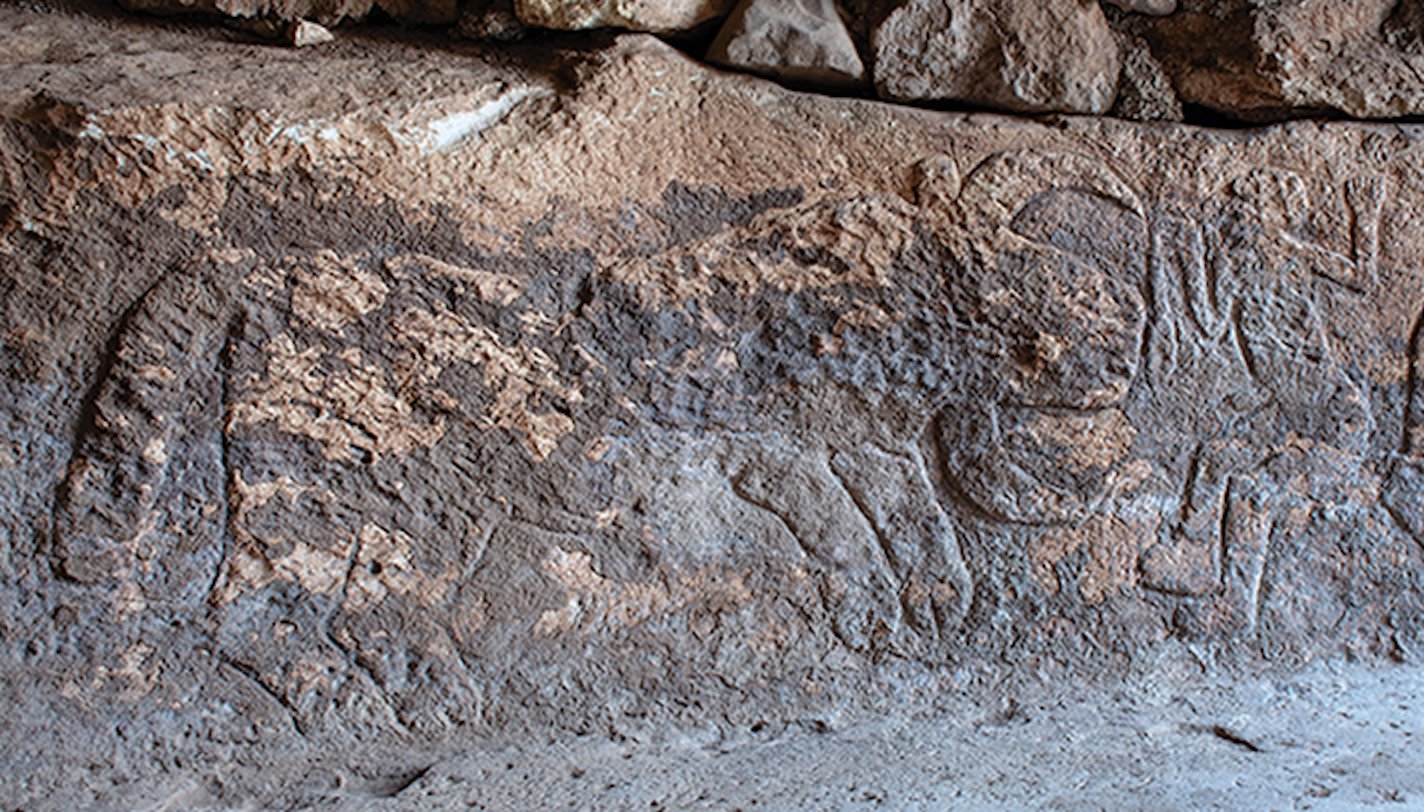
- A second male figure, more lightly carved, holding an object and turned toward a large animal.
- A bull, its horns exaggerated, filling the other end of the panel.
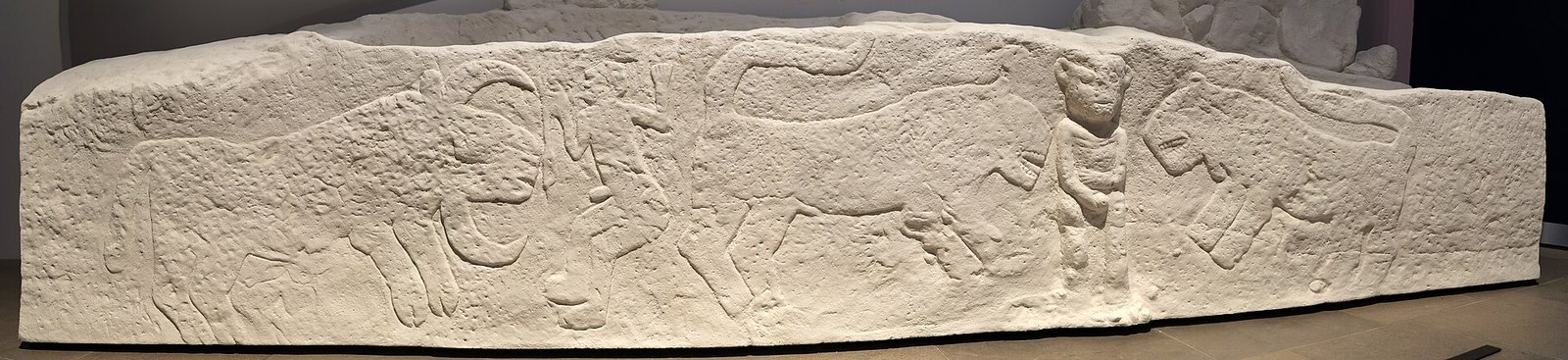
The two scenes
The five figures form two linked groups. The first is the leopard–human–leopard scene: the central man hemmed in by two predators, their bared teeth turning the moment tense. The second is the bull–human scene: a man facing a powerful horned animal, an object in his hand. Placed on one continuous bench, the two groups read as parts of one message rather than separate pictures.
Why it counts as a narrative
Neolithic art from this region is full of animals and human forms. What makes Sayburç different is relationship: the figures act on one another. A person is not simply shown beside a leopard — he is surrounded, confronted, engaged. That shift, from depicting things to depicting an event, is why researchers call this a narrative scene and why it matters for the history of storytelling itself.
Where it sits: the bench and the audience
The carving cannot be separated from the room around it. The reliefs run along the front of a bench built against the wall of a roughly 11-metre, bedrock-carved communal building. Anyone using the bench would sit with the images at their back or before them — the seat, the wall, the viewer and the scene are one arrangement. The relief was made to be encountered by people gathered together, in a space built for gathering.
Sayburç lets us see everyday life and belief in the same place — the images sit right beside the houses.
— paraphrasing Assoc. Prof. Dr. Eylem Özdoğan on the significance of the settlement.
What it does not prove
It is tempting to decode the scene into a single myth — a hero, a hunt, an initiation, a god. Özdoğan cautions against exactly this: isolated figures, read without their context, invite sensational stories that the evidence cannot support. The honest position is that Sayburç gives us a composed, deliberate scene whose specific meaning stays open. You can explore the leading interpretations — including the widely-shared "leopard-man" reading — on our dedicated page.
Keep exploring
Sources
- Özdoğan, E. 2022. "The Sayburç reliefs: a narrative scene from the Neolithic." Antiquity 96(390), 1599–1605. Cambridge Core
- HeritageDaily, "Archaeologists discover oldest known narrative scene dating from 11,000 years ago" (2022). link
- Science / AAAS, "Prehistoric carvings depict showdowns between humans and beasts." link