The animals carved across the Stone Hills are not a random menagerie. Again and again they are scavengers and predators — vultures, and the big cats and boar that would strip a carcass. At Göbekli Tepe, one famous pillar shows a vulture beside a headless human body. It has fuelled a powerful idea: that the dead were deliberately exposed, their flesh given to the birds, before the bones — and especially the skull — were collected and kept.
The birds and the body
Excarnation is well documented in later cultures, and the Neolithic imagery of the region fits it uncomfortably well: scavenging birds paired with human remains, and a clear, repeated interest in the skull after death. If bodies were first exposed to vultures, then the careful treatment of skulls we see at Sayburç and its neighbours would be the second act in a longer funerary drama.
The animals they carved most are the ones that eat the dead. It's hard not to think the two things are connected.
— field reflection at Sayburç, on the scavenger imagery in the carvings.
The evidence at Sayburç
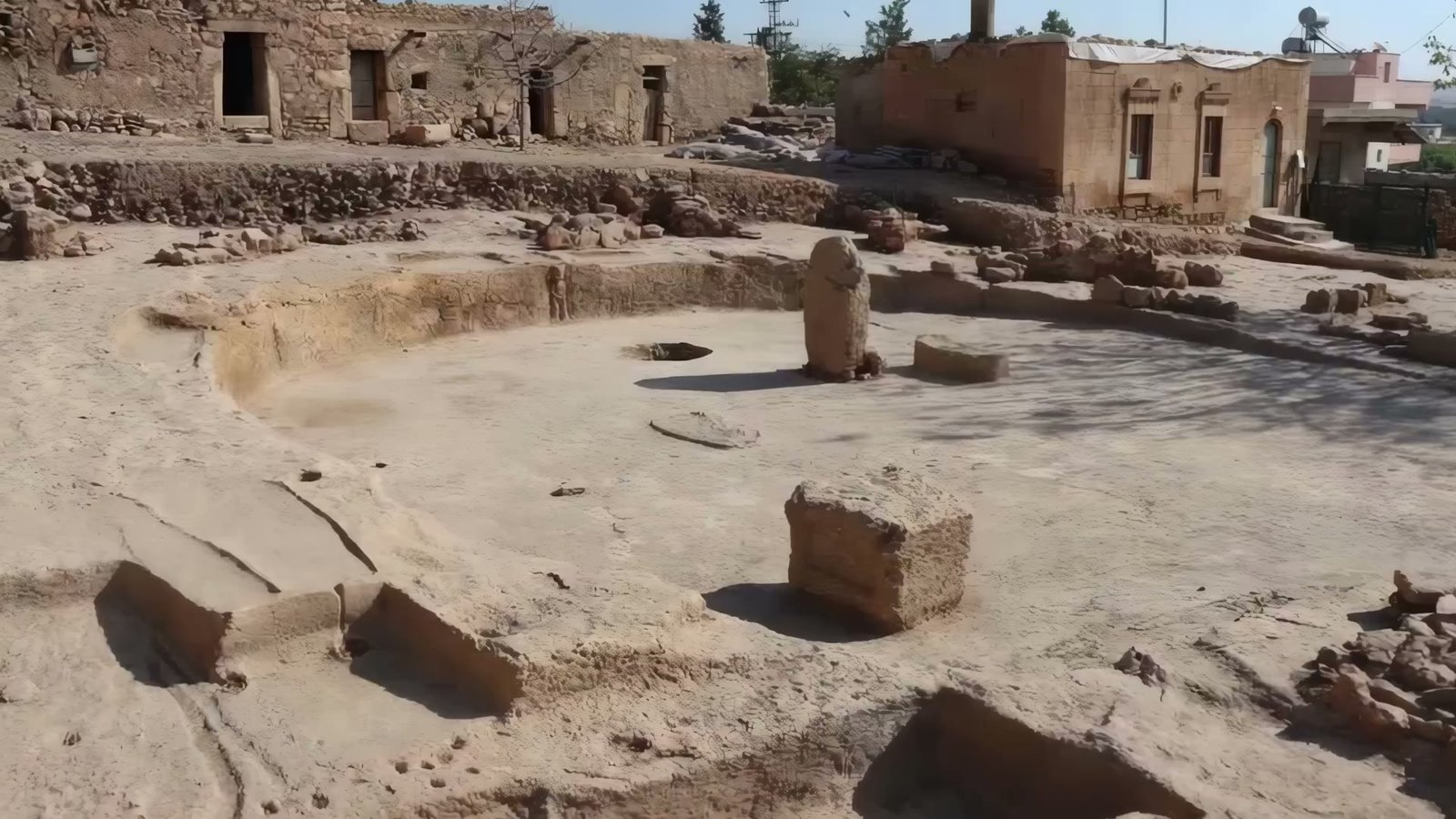
Within the settlement, some deposits mix animal bones with human bones — the kind of association that keeps the excarnation question open. Combined with the burials kept inside the homes and the skull set into a niche, Sayburç shows a community with more than one way of handling the dead. Sky burial may have been one of them; it is not yet proven here.
Painted, too
There is colour in this story. At Göbekli Tepe, a recently found boar sculpture still carried traces of red and white paint — a reminder that these carved animals, now bare grey stone, were once vivid. The world of the Neolithic dead was not drab; it was painted, populated, and charged with meaning we are only beginning to read.
Sources
- Göbekli Tepe "Vulture Stone" (Pillar 43) and excarnation debate — DAI Göbekli Tepe research. Tepe Telegrams
- Göbekli Tepe painted boar sculpture with red/white pigment (2023–24 reporting).
- Field observations at Sayburç (mixed human/animal bone deposits, 2025–26 season). Interpretation kept open.